94 750 Virago Manual Download
Feb 18, 2013 Tag Archives: Yamaha XV750 Virago Yamaha XV535 700 750 920 1000&1100 Viragos Service Repair Manual. Have a problem? Instant download Yamaha XV535, XV700, XV750, XV920, XV1000 & XV1100 Viragos Service Repair Manual, Fix it! 1988-2013 Yamaha XV250 Virago Service Repair Factory Manual DOWNLOAD; 1983-1986 Yamaha YTM200. Yamaha Virago 750 Manual Pdf.pdf - Free download Ebook, Handbook, Textbook, User Guide PDF files on the internet quickly and easily. Aug 09, 2011 How do i line up timing marks on 94 virago 750 Hi, Dgoss1017 for this scenario you will need your service/owners manual if you can't find the first and best tool you ever bought for your Yamaha, despair not, for a mere zero $0 you can download another one. Motorcycle Manuals. Motorcycle service and repair manuals are now online, click to download. Agusta MV.F4 750 Aprilia Pegaso 650 '97 Service Manual Aprilia Pegaso 655 '95 Repair Manual Aprilia RS125 99 03 Aprilia RS250 Aprilia RST Mille Workshop Manual. Yamaha Virago XV250S Owners Manual Yamaha Virago XV500K 1993. Our XV750 Virago XV Models workshop manuals contain in-depth maintenance, service and repair information. Get your eManual now! Download Yamaha XV750 XV 750 VIRAGO Service Repair Workshop Manual. VIEW DETAILS. YAMAHA VIRAGO XV750 Parts Manual Catalog Download 1995. Yamaha XV535 Virago Service Repair Manuals on Tradebit. Tradebit merchants are proud to offer motorcycle service repair manuals for your Yamaha XV535 Virago - download your manual now! Yamaha Virago XV535 XV1100 Workshop Manual 1981 1982 1983-94. Yamaha Corporation (ヤマハ株式会社 Yamaha Kabushiki Gaisha?) (TYO: 7951) is a Japanese multinational corporation and conglomerate based in Japan with a very wide range of products and services, predominantly musical instruments.
INSTANT DOWNLOADS
1998 Yamaha Virago 750
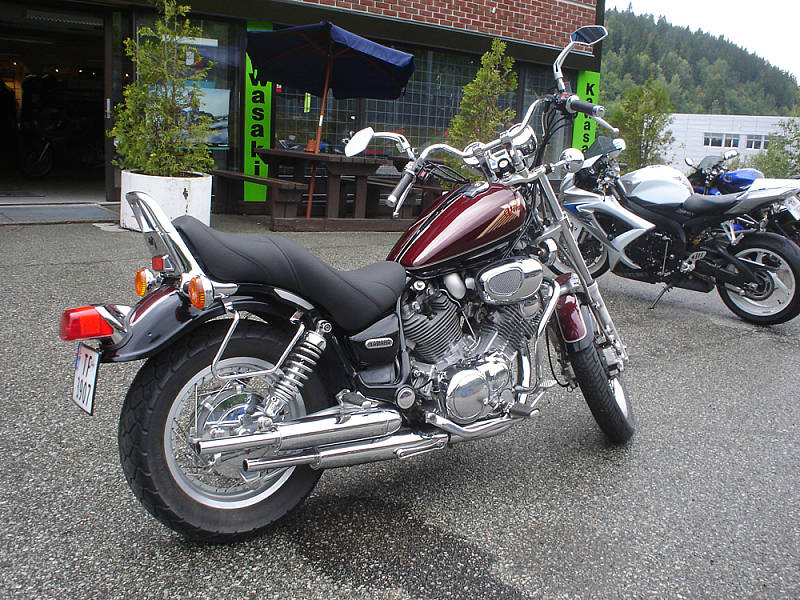

Yamaha Motorcycles Virago 750
Service Manuals & Owner's Manuals Delivered To Your Computer, Fix Your Problems Now!
Have a problem? 1998 2002 isuzu workshop manual download. Instant download 1998-2002 Isuzu Trooper Bighorn UBS Service Repair Workshop Manual, Fix it!
Yamaha Virago 750 For Sale
DOWNLOAD COMPLETE YAMAHA VIRAGO SERVICE MANUAL TO YOUR COMPUTER IN SECONDS |
|
Buy this file: Yamaha Virago Online Service |
YAMAHA VIRAGO XV535 XV700 XV-750 XV-920 XV-1000 XV-1100 SERVICE MANUAL APPLICATION:XV-535 (U.S. 1987-1988-1989-1990, 1993-1994-1995-1996-1997-1998-1999-2000) (U.K. 1988-2003) XV700 (1984-1987) XV750 (1981--1982-1983, 1988--1989-1990-1991-1992-1993-1994-1995-1996-1997) XV920 (1982-1983) XV1000 (1984-1985) XV1100 (1986-1987-1988-1989-1990-1991-1992-1993-1994-1995-1996-1997-1998-1999). Also identified in this Yamaha Virago service repair manual is Euro-style chain-drive and shaft driven models. |
STARTER TROUBLESHOOTING 1.1
Table 1-1. Starter Does Not Run or Runs At Very Low Speeds
SOURCE OF
PROBLEM
PROBABLE CAUSE SOLUTION
Battery
Voltage drop due to discharged battery. Charge battery.
Short-circuited or open between electrodes. Replace battery.
Poor contact condition of battery terminal(s). Clean and retighten.
Wiring
Poor or no connection at either battery positive or
negative cable, at either end.
Repair or replace cable(s).
Cracked or corroded battery cable ends. Clean, tighten or replace cable(s) as needed.
Open wire(s) or poor connection at handlebar
switch or starter relay, especially relay ground wire
(grounds through TSM/TSSM).
Tighten connections or repair or replace wire(s).
Handlebar
start switch
Poor switch contacts or open switch. Replace switch.
Starter relay
Open coil winding. Replace relay.
Poor or no continuity at relay points. Replace relay.
TSM/TSSM has disabled starter relay.
Check for open on wire to TSM/TSSM. Correct
lack of ground.
Solenoid
Poor contact condition caused by burnt contact.
Polish contact surface or replace solenoid
assembly.
Pull-in winding open or short-circuited. Repair or replace solenoid assembly.
Hold-in winding open or short-circuited. Repair or replace solenoid assembly.
Starting motor
Brushes worn below specification.
Check brush spring tension. Replace field frame
and holder.
Commutator burnt. Re-face or replace.
Commutator high mica. Correct by undercutting.
Field winding grounded. Replace.
Armature winding grounded or short-circuited. Replace.
Reduction gears damaged. Replace.
Insufficient brush spring tension. Replace.
Disconnected lead wire between solenoid and field
windings.
Repair or replace lead wire.
Ball bearing sticks. Replace bearing.
Table 1-2. Pinion Does Not Engage With Ring Gear While
Starter is Cranked or Engine Cannot Be Cranked
SOURCE OF
PROBLEM
PROBABLE CAUSE SOLUTION
Battery
Voltage drop due to discharged battery. Charge battery.
Short-circuited or open between electrodes. Replace battery.
Poor contact condition of battery terminal(s). Clean and retighten.
Overrunning
clutch.
Overrunning clutch malfunction (rollers or compression
spring).
Replace overrunning clutch.
Pinion teeth worn out. Replace pinion.
Pinion does not run in overrunning direction. Replace overrunning clutch.
Poor sliding condition of spline teeth.
Remove foreign materials, dirt or replace overrunning
clutch or pinion shaft.
Reduction gears damaged. Replace overrunning clutch and idler gear.
Jackshaft
assembly
Improper jackshaft parts assembly Disassemble and assemble parts properly.
Gear teeth on
clutch shell
Excessively worn teeth.
Replace clutch shell.
Table 1-3. Starter Does Not Stop Running
SOURCE OF
PROBLEM
PROBABLE CAUSE SOLUTION
Starting switch or
starter relay.
Unopened contacts. Replace starting switch or starter relay.
Poor return caused by sticky switch
or relay contacts.
Replace starting switch or starter relay.
Gear teeth on
clutch shell
Excessively worn teeth. Replace clutch shell.
Solenoid.
Return spring worn. Replace spring.
Coil layer shorted. Replace solenoid.
Contact plate melted and stuck. Replace solenoid.
STARTING SYSTEM DIAGNOSIS 1.2
DIAGNOSTICS
Diagnostic Notes
The reference numbers below correlate with the circled numbers
on the starter system flow charts.
1. Remove starter motor. Connect jumper wires as
described under FREE RUNNING CURRENT DRAW
TEST under 1.6 TESTING STARTER ON BENCH.
2. See VOLTAGE DROPS under 1.4 DIAGNOSTICS/
TROUBLESHOOTING.
3. See STARTER CURRENT DRAW TEST under 1.5
TESTING STARTER ON MOTORCYCLE.
4. Connect BREAKOUT BOX (Part No. -42682) (black)
and 6-pin Harness Adapters (Part No. 42962)
between wiring harness connector [22A] and right hand
control harness connector [22B].
5. See FREE RUNNING CURRENT DRAW TEST under
1.6 TESTING STARTER ON BENCH. Starter Testing 5: Starter Spins But Does Not Engage
Starter Testing 6: Starter Stalls or Spins Too Slowly
Remove starter. Disassemble drive
housing assembly. Inspect for damage
to armature gear or idler gear.
Is damage present?
Remove and disassemble starter
jackshaft assembly.
Is jackshaft properly assembled?
Assemble jackshaft
properly.
Replace damaged idler
gear and armature.
clutch failure.
Replace starter clutch.
Perform voltage drop tests between
battery positive to starter battery
terminal. Crank engine.
Is voltage drop greater than 1.0 volt?
Perform voltage drop tests from battery
positive to starter motor terminal. Crank engine.
Is voltage drop greater than 1.0 volt?
Repair connection
between battery and
starter.
Repair or replace
solenoid (contacts).
Perform voltage drop tests
between battery negative and
starter studs or bolts.
Is voltage drop greater than 1.0 volt?
Clean ground
connections.
Perform starter motor current
draw test (on vehicle).
Perform starter motor free
running current draw bench test.
Are test results within range?
Remove spark plugs while in
5th gear. Rotate rear wheel.
Check for engine, primary
and/or crankshaft bind.
Replace or repair
starter motor. | DIAGNOSTICS/TROUBLESHOOTING 1.4
GENERAL
The troubleshooting tables beginning on page 1-1 contain
detailed procedures to solve and correct problems. Follow the
1.2 STARTING SYSTEM DIAGNOSIS diagram to diagnose
starting system problems. The VOLTAGE DROPS procedure
below will help you to locate poor connections or components
with excessive voltage drops.
VOLTAGE DROPS
Check the integrity of all wiring, switches, circuit breakers and
connectors between the source and destination.
The voltage drop test measures the difference in potential or the
actual voltage dropped between the source and destination.
1. See ITEM A in Figure 1-2. Attach your red meter lead to
the most positive part of the circuit, which in this case
would be the positive post of the battery (5).
2. See ITEM B in Figure 1-2. Attach the black meter lead to
the final destination or component in the circuit (solenoid
terminal from relay).
3. Activate the starter and observe the meter reading. The
meter will read the voltage dropped or the difference in
potential between the source and destination. An ideal
circuit’s voltage drop would be 0 volts or no voltage
dropped, meaning no difference in potential.
4. See ITEM C in Figure 1-2. An open circuit should read
12 volts, displaying all the voltage dropped, and the
entire difference in potential displayed on the meter.
NOTE
Open circuits on the ground side will read zero.
5. Typically, a good circuit will drop less than 1.0 volt. If the
voltage drop is greater, back track through the connections
until the source of the potential difference is found.
The benefits of doing it this way are speed and accuracy.
a. Readings aren’t as sensitive to real battery voltage.
b. Readings show the actual voltage dropped, not just
the presence of voltage.
c. This tests the system as it is actually being used. It
is more accurate and will display hard to find poor
connections.
d. This approach can be used on lighting circuits, ignition
circuits, etc. Start from most positive and go to
most negative (the destination or component).
6. See ITEM D in Figure 1-2. The negative or ground circuit
can be checked as well.
a. Place the negative lead on the most negative part of
the circuit (or the negative battery post). Remember,
there is nothing more negative than the negative
post of the battery.
b. Place the positive lead to the ground you wish to
check.
c. Activate the circuit. This will allow you to read the
potential difference or voltage dropped on the negative
or ground circuit. This technique is very effective
for identifying poor grounds due to powdered paint.
Even the slightest connection may cause an ohmmeter
to give a good reading. However, when sufficient
current is passed through, the resistance
caused by the powdered paint will cause a voltage
drop or potential difference in the ground circuit.
STARTER RELAY TEST
1. Remove left side cover.
2. See Figure 1-4. Locate starter relay (1) in upper corner
of oil tank on motorcycle’s left side.
3. To test relay, proceed to Step 4. If installing a
new
starter
relay, unplug old relay from relay/fuse block and replace.
CAUTION
Only connect relay terminal 2 to negative battery terminal.
Improper connections will damage the diode connected
across the relay windings.
4. See Figure 1-5. The starter relay can be tested using the
motorcycle’s 12 volt battery and a multimeter.
a. Unplug relay from relay/fuse block.
b. To energize relay, connect the battery leads to terminals
1 and 2 as shown, battery positive (+) to terminal
1, battery negative (–) to terminal 2.
c. Check for continuity between terminals 3 and 5. A
good relay shows continuity (continuity tester lamp
“on” or a zero ohm reading on the ohmmeter). A
malfunctioning relay will not show continuity and
must be replaced.
5. If starter relay is functioning properly, plug it into relay/
fuse block and proceed to STARTER CURRENT DRAW
TEST.
STARTER CURRENT DRAW TEST
NOTES
●
Engine temperature should be stable and at room temperature.
●
Battery should be fully charged.
See Figure 1-6. Check starter current draw with an induction
ammeter before disconnecting battery. Proceed as follows:
1. Verify that transmission is in neutral. Disconnect spark
plug wires from spark plug terminals.
2. Clamp induction ammeter over positive battery cable
next to starter.
3. With ignition key switch ON, turn engine over by pressing
starter switch while reading the ammeter. Disregard initial
high current reading which is normal when engine is
first turned over.
a. Typical starter current draw will range from 160 to
200 amperes.
b. If starter current draw exceeds 250 amperes, the
problem may be in the starter or starter drive.
Remove starter for further tests. See the Sportster
Service Manual.
NOTE
See Figure 1-6. A DC current probe may be used if an induction
ammeter is not available.
TESTING STARTER ON BENCH 1.6
FREE RUNNING
CURRENT DRAW TEST
1. Place starter in vise, using a clean shop towel to prevent
scratches or other damage.
2. See Figure 1-8. Attach one heavy jumper cable (6 gauge
minimum).
a. Connect one end to the starter mounting flange (1).
b. Connect the other end to the negative (–) terminal of
a fully charged battery (2).
3. Connect a second heavy jumper cable (6 gauge minimum).
a. Connect one end to the positive (+) terminal of the
battery (2).
b. Connect the other end to the battery terminal (4) on
the starter solenoid. Place an inductive ammeter (3)
over cable.
4. Connect a smaller jumper cable (14 gauge minimum).
a. Connect one end to the positive (+) terminal of the
battery (2).
b. Connect the other end to the solenoid relay terminal
(5).
5. Check ammeter reading.
a. Ammeter should show 90 amps maximum.
b. If reading is higher, disassemble starter for inspection.
See the Sportster Service Manual.
c. If starter current draw on vehicle was over 200 amps
and this test was within specification, there may be a
problem with engine, primary drive or jackshaft.
STARTER SOLENOID
1WARNING
Wear eye protection during this series of tests. These
tests may produce flying sparks which could result in
death or serious injury.
NOTE
Do not disassemble solenoid. Before testing, disconnect field
wire from motor terminal as shown in Figure 1-9.
CAUTION
Each test should be performed for only 3-5 seconds to
prevent damage to solenoid.
NOTE
The solenoid Pull-in, Hold-in, and Return tests must be performed
together in one continuous operation. Conduct all
three tests one after the other in the sequence given without
interruption. |
Searches: - Virago 1985 Virago 1000cc XV1000 Black
- Virago 500 XV500 Yamaha Virago 500 cruiser
- Virago Yamaha Virago 1100 1982
- Yamaha Virago Virago XV920 1983
- Yamaha Virago XV920 XV920R STARTER 920 cc 1981 NEW
- YAMAHA XV750 VIRAGO 750 MOTORCYCLE STARTER 1984
- YAMAHA VIRAGO XV 700-750-1000-1100 HITACHI CARB FLOAT
- Yamaha Virago Starter Drive 1986
- 1987 Yamaha Virago Starter Clutch Assy
- YAMAHA VIRAGO 1987 XV 750-1100 OEM STARTER CLUTCH
- 1988 STARTER ELECTRIC XV920 YAMAHA XV 920 VIRAGO
- Starter Solenoid Relay 1989 Yamaha XV750 VIRAGO 750
- YAMAHA XV1000 VIRAGO STARTER PARTS XV 1000
- Starter Idler Gear 1 1989 Yamaha Virago XV500 XV 500
- Yamaha Motorcycle Starter XV1100 Virago 1063cc 1992
- Yamaha XV750 XV 750 Virago 700 electric starter motor
|
|


